
Selection Process
How Students are Selected
Have you ever been curious about how students are selected for participation in the Kentucky Intercollegiate Band? This page will attempt to explain the process.
The selection process for the Kentucky Intercollegiate Band is dependent on the use of a formula, a formula that was approved and agreed upon by the general membership many years ago. The formula guarantees some things – but also allows for other things. The success of the formula hinges upon the truthful and forthright nominations of each director.
As is stated in the guidelines, each University director may nominate up to 20% of their total concert or symphonic band personnel. Additionally, each band member nominated must be fluent with, and able to positively contribute to, literature of a Grade VI level. Each director is asked to make appropriate nominations, listing their personnel in “rank order” regardless of instrument [in other words…if Tommy is the very finest player in your band, and Tommy happens to play tuba, then Tommy should be listed first in your submissions.
When the KIB Coordinator receives the nominations, they then establish a database or spreadsheet with all of the received raw nominations [these calculations used to be done by hand, which was not a pretty sight]. Listed on the database or spreadsheet will be the band member’s name, their instrument and the “rank” as established by the nominating director. This is the first of the four very important numbers that establish selection. The second column of numbers is a reverse listing of the numbers of nominated band members. The third column is the total number of members nominated from the institution, and the fourth and final column is the “rating” as established by the formula.
In short…Column Two divided by Column Three equals Column Four. The following example grid should help clarify the process.
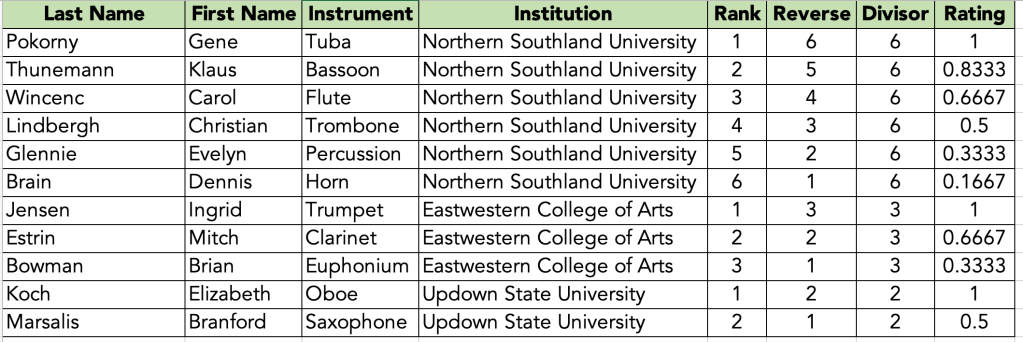
After the Coordinator has entered all of the raw data (usually 220+ nominations!) and the “rating” has been established, the raw data is then sorted by instrument. This generates a listing of, for example, all of the flute players nominated and their respective “ratings” from highest to lowest. At this time the KIB Coordinator, often with the advice and consent of colleagues, looks at the raw, data (sorted by instrument) and selects instrumentation based on the usual Intercollegiate Band roster numbers.
The typical Kentucky Intercollegiate Band consists of the following:
- Flute/Piccolo – 10
- Oboe – 4 (including English Horn)
- Bassoon – 4 (including Contrabassoon)
- B-flat Soprano Clarinet – 24 (including E-flat Soprano Clarinet)
- E-flat Alto Clarinet – 1
- B-flat Bass Clarinet – 4 (including Contra-Alto or Contrabass Clarinet)
- Alto Saxophone – 4 (including soprano saxophone)
- Tenor Saxophone – 2
- Baritone Saxophone – 2
- Trumpet – 12
- Horn – 8
- Trombone – 8
- Bass Trombone – 2
- Euphonium – 4
- Tuba – 6
- String Bass – 1 (if repertoire calls for it)
- Harp – 1 (if repertoire calls for it)
- Piano – 1 (if repertoire calls for it)
- Percussion – 8
As you can see, the formula guarantees participation from each and every institution that submits nominations. Each college or university will always have a student with a “1.000” rating – even if there is only one nomination from that school – and that student will be selected for participation.
It also means that the “best” players are not always necessarily chosen, which is why the Kentucky Intercollegiate Band is specifically billed as being only “representative of the finest wind and percussion players from college and universities in the Commonwealth”. This is also why the key to a successful KIB is very honest nominations from each director.
I hope that this may clarify the selection process and give everyone in our membership a more clear view of how the selection process is conducted.





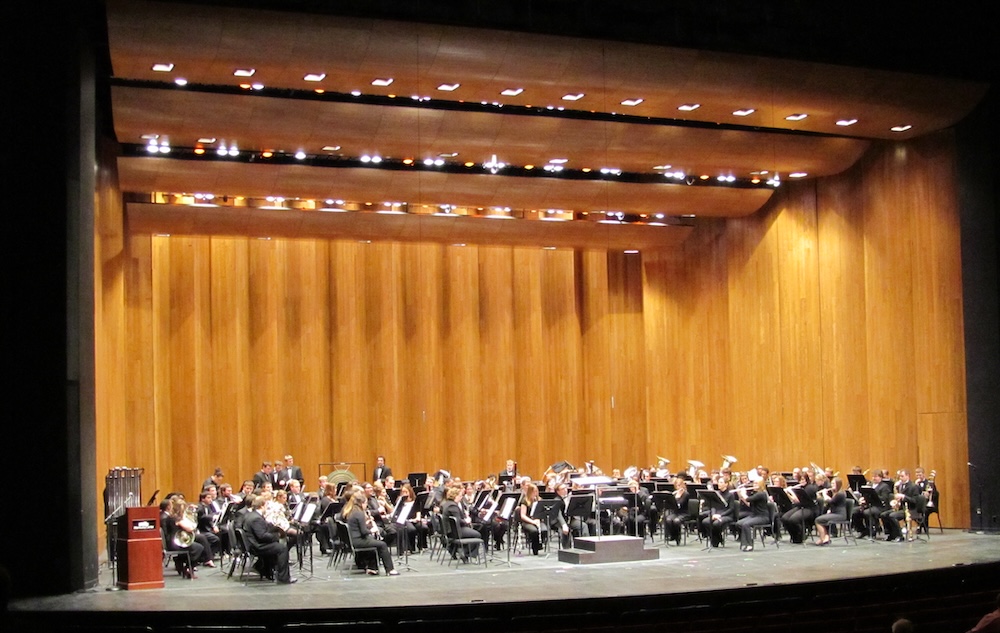


 Kentucky Intercollegiate Band